Marking Metal: Precision, Speed, and Versatility

What Is Metal Laser Marking?

Metal marking has become an essential part of modern manufacturing, product traceability, and customization. From aerospace components and medical devices to branded tools and industrial nameplates, businesses rely on metal marking laser machines to create permanent, high-contrast marks quickly and accurately.

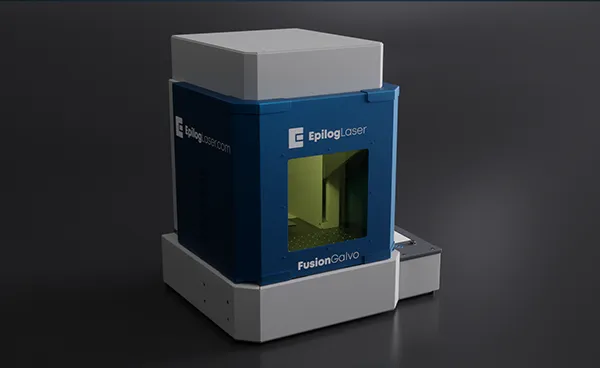
metal marking with the fusion galvo fiber laser
fiber laser engraved wrench and co2 cut foam organizer
pocket knives marked with an epilog fiber laser machine

Whether you’re evaluating your first fiber laser engraver or comparing flatbed and galvo systems for production, understanding the capabilities of today’s laser technology can help you choose the right solution for your workflow. Here we’ll explore how metal laser marking works, the advantages of fiber laser technology, and how Epilog Laser systems simplify industrial metal marking.

Metal laser marking uses a concentrated laser beam to create permanent marks on metal surfaces. Depending on the material and laser settings, the process can produce several different results:
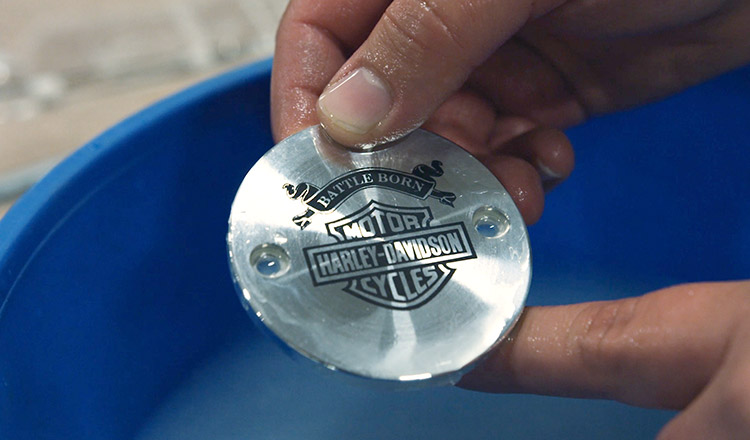
Annealing

Annealing changes the color of the metal surface without removing material. This process is commonly used on stainless steel and titanium when a smooth, corrosion-resistant mark is required.
Tan pistol slide with rear serrations and barbed wire laser etching along the side

Etching

Laser etching removes a small amount of material to create a visible mark. It is ideal for logos, text, serial numbers, and identification markings.
polish engraving example

Polishing

The laser beam heats the surface of the material to create polished metal, also known as “mirrored.” The surface then cools down, resulting in a shiny finish. Most common on matte-finish metal, this technique creates marks that can look almost holographic.

Unlike etching, the heat alters the finish of the metal without removing any material from it. The polished look is commonly found on high-end signs and high-quality product labels. It is used to give them a sophisticated and unique appearance. The mirrored finish creates a tone-on-tone look by marking the metal.

Deep Engraving

Engraving removes more material than etching, creating deeper marks designed to withstand harsh environments and years of wear.

Different metals react differently to various laser wavelengths. Stainless steel, titanium, aluminum, brass, and other alloys each require specific settings and laser sources to achieve optimal results. Fiber lasers are typically the preferred choice for direct metal marking because their wavelength is highly absorbed by metal surfaces, resulting in faster speeds and higher contrast marks.

Get our Free
Metal Marking Guide!

Fill out the form and we will email you a copy of the Guide for Fiber Industrial Etching & Marking, Machine Pricing, and Engraved Samples..

This site is protected by reCAPTCHA and the Google Privacy Policy and Terms of Service apply.
Why Choose a Fiber Laser for Metal Marking?

Whether you’re marking aerospace components, creating identification plates, or producing customized products, Epilog provides solutions designed to help businesses improve efficiency and maintain consistent quality.

Epilog Laser systems are designed to help businesses produce professional-quality results while minimizing downtime and maximizing productivity.

When it comes to industrial metal marking, fiber laser technology offers significant advantages over other laser types.


Optimized for Metal Processing

Fiber lasers operate at a wavelength of 1064 nm, which is highly effective for marking metals. This allows for:

  • Faster marking speeds
  • Higher contrast marks
  • Greater precision on small details
  • Reliable barcode and data matrix code creation

Minimal Maintenance

Unlike many traditional marking systems, fiber lasers feature long-life laser sources that require very little maintenance. Fiber laser sources are built to provide reliable, long-lasting performance, making them an excellent choice for busy production environments.

  • Optics cleaning
  • Workspace clean up
  • Routine exhaust checks

Exceptional Precision

Fiber laser systems excel at producing precision marking in aerospace, medical devices, manufacturing, automotive production, and industrial fabrication.

  • Serial numbers
  • UID markings
  • QR codes
  • Data matrix codes
  • Logos
  • Fine text
  • Product identification marks

Flatbed vs Galvo: Which Configuration Is Right for You?


Flatbed Systems

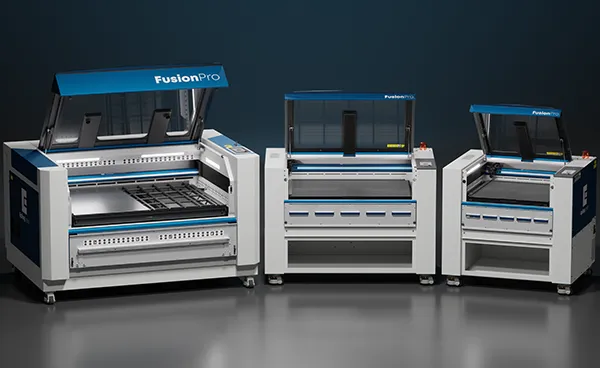
Flatbed systems such as those in the Fusion Pro and Fusion Ascent series provide large work areas that allow users to:

  • Mark oversized parts
  • Process multiple items in a single jig
  • Easily position products using a camera system
  • Handle mixed production runs

Galvo Systems

The Fusion Galvo G100 is designed for high-speed industrial marking applications where efficiency and throughput are critical. Galvo systems are ideal for:

  • Serialization
  • Barcode marking
  • Meeting traceability requirements
  • Small component marking
One of the most common questions buyers ask is whether they need a flatbed laser system or a galvo laser system. The answer depends on your applications, part sizes, and production goals.
FeatureFlatbed Fiber LaserGalvo Fiber Laser
Best For
Large parts and fixtures
High-speed production
Work Area
Large engraving tables
Smaller marking field
Throughput
Multiple parts in one setup
Extremely fast single-part or small-batch marking
Common Applications
Large nameplates, tools, panels, fixtures
Barcodes, serial numbers, medical devices, industrial components

Industry-Leading Features: The Epilog Advantage

Engrave almost any metal

IRIS™ HD+ Camera Positioning System

Accurate part placement is one of the biggest challenges in laser marking. Epilog’s IRIS™ HD+ Camera System allows operators to view their workpiece directly on-screen and position artwork precisely where it belongs.

Benefits include:

  • Faster setup
  • Reduced material waste
  • Improved accuracy
  • Easier handling of irregularly shaped parts

Simply drag and drop artwork onto the live camera image and print!

barcode engraving

MOPA Fiber Laser Technology

For manufacturers seeking maximum versatility, Epilog uses MOPA fiber laser sources, which offer additional control over pulse duration and frequency.

Benefits include:

  • Enhanced marking on sensitive materials
  • Greater control over contrast
  • Reduced heat impact
  • marking capabilities on stainless steel

Color marking on stainless steel is a particularly popular application for companies looking to create visually distinctive branding or identification marks.

Print from existing software

Print from Your Existing Software

Many industrial marking systems require proprietary software and complex workflows. Epilog systems allow users to work directly from familiar design programs such as:

  • Adobe Illustrator
  • CorelDRAW
  • AutoCAD
  • SolidWorks-compatible workflows
  • Other Windows-based graphics applications

For Mac users, we also offer Epilog Pulse, a web-based app that enables our users to send jobs to the laser from their Mac, PC, or tablet – any device where you can access a browser.

Printing multiple objects in single pass

Get connected with PrintAPI

Epilog’s PrintAPI gives businesses and software developers the ability to integrate Epilog laser systems directly into existing workflows, production software, and custom applications. By connecting your laser to the systems you already use, PrintAPI helps eliminate manual steps, reduce errors, and improve operational efficiency.

  • Automate Job Submission – Send laser jobs directly from your software to the machine.
  • Improve Workflow Efficiency – Integrate with ERP, MES, ecommerce, and custom business systems.
  • Scale Production Operations – Support higher job volumes without increasing administrative workload.
  • Enable Custom Solutions – Build workflows tailored to your unique business requirements.

    Top Applications for Metal Marking

    Traceability and Compliance

    Industries such as aerospace, defense, and medical manufacturing rely on permanent laser markings for regulatory compliance and quality control. Common examples include:

    • Data matrix codes
    • UID markings
    • QR codes
    • Barcodes
    • Part tracking information

    Industrial Identification

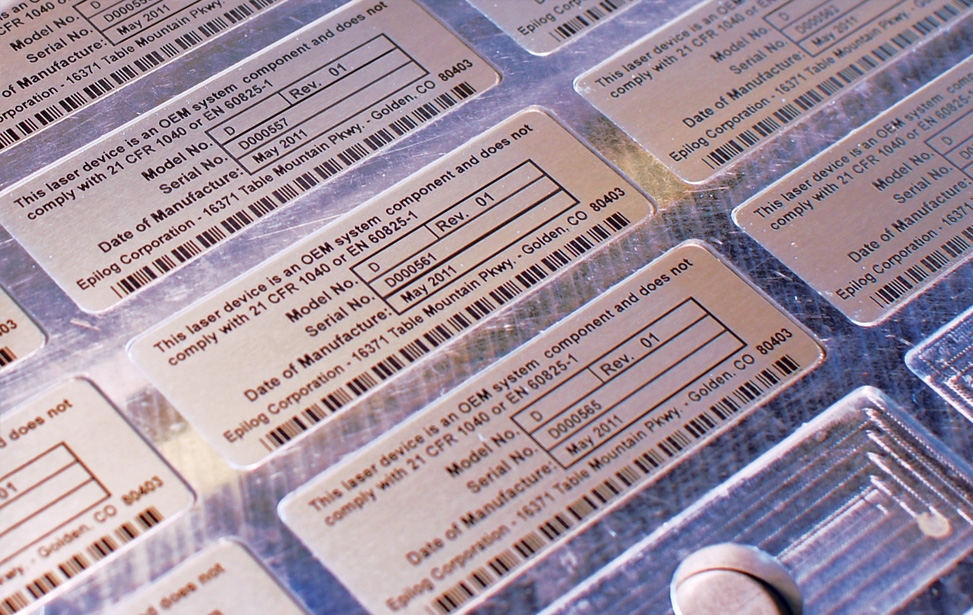
    Fiber laser systems create permanent, readable markings for industrial identification throughout a product’s lifespan, including:

    • Serial numbers
    • Asset tags
    • Equipment labels
    • Specification plates
    • Control panel markings

    Product Personalization

    Laser marking allows manufacturers and customization businesses to personalize products quickly and accurately, including:

    • Custom knives
    • Tools
    • Awards
    • Promotional products
    • Firearm components
    • Branded merchandise

    Why Choose an Epilog Fiber Laser Engraving Machine?

    Whether you’re marking aerospace components, creating identification plates, or producing customized products, Epilog provides solutions designed to help businesses improve efficiency and maintain consistent quality.

    Epilog Laser systems are designed to help businesses produce professional-quality results while minimizing downtime and maximizing productivity.

    Industry-Leading Performance
    • Engraving speeds up to 165 IPS (4,200 mm/s)
    • High-resolution engraving
    • Precise vector cutting
    • Consistent, repeatable results
    Intuitive Software

    Design using your preferred graphics software and send jobs to the laser just like printing a document.

    The Epilog Job Manager lets you organize, preview, and quickly recall frequently used jobs, making repeat production simple and efficient.

    Built for Long-Term Reliability

    Epilog designs and manufactures our own RF CO2 laser tubes in-house, giving us complete control over quality, performance, and reliability. Combined with premium machine components and rigorous testing, our laser systems are built to deliver years of dependable operation in demanding production environments. Learn more about the differences between glass and metal laser tubes in our blog and why Epilog chooses RF metal and ceramic technology.

    Designed, Engineered, and Supported in the USA

    Every Epilog laser is engineered, manufactured, and supported by our headquarters in Golden, Colorado. That means direct access to knowledgeable technical support, replacement parts, and factory-trained service when you need it.

    Industry-Leading Support

    Investing in a laser system is more than choosing a machine, it’s choosing a partner. From installation and training to technical support and ongoing resources, Epilog is committed to helping you get the most from your investment.

    • U.S.-based technical support
    • Comprehensive training resources
    • Extensive material settings library
    • Two-year machine and laser tube warranty
    • Global distributor network

      FAQ

      Can a CO2 laser mark metal?

      A CO2 laser generally cannot directly mark bare metal. However, marking agents such as CerMark® or EnduraMark® can be applied to the metal surface and permanently bonded using a CO2 laser. For direct metal marking, a fiber laser is the preferred solution.

      How long does a fiber laser source last?

      Industrial fiber laser sources are built for long-term reliability, helping manufacturers maintain consistent production with minimal downtime.

      What is the difference between laser etching and laser engraving?

      Laser etching removes a small amount of material from the surface, while laser engraving removes more material to create a deeper mark. Engraving is generally used when durability and longevity are priorities.

      What industries use metal marking lasers?

      Common industries include:

      • Aerospace
      • Medical device manufacturing
      • Automotive
      • Defense
      • Electronics
      • Industrial manufacturing
      • Product personalization

      Want to learn more about
      how an Epilog Laser can
      fit into your workflow?